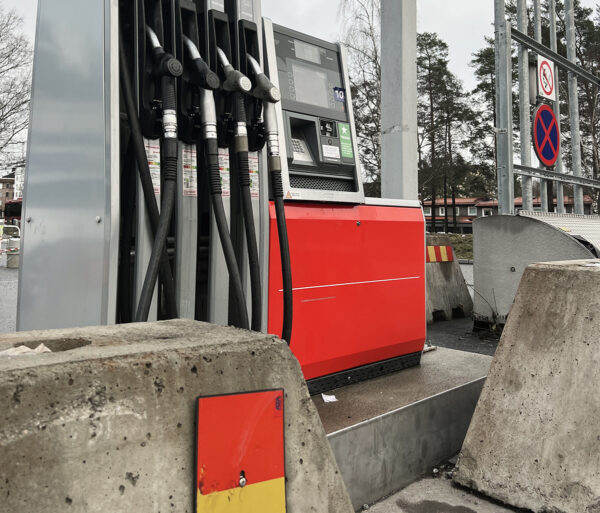
Many people don’t realize that a large number of wheelchair users drive their own cars. As a result, it is often challenging or even impossible to refuel or charge cars independently.
For an example of how some wheelchair users drive or get in their cars, have a look at this video by Kathryn Granger.
What Wheelchair Users Experience at Fuel or Charging Stations
I use a wheelchair myself, but I don’t have a driving license yet. Since the European Accessibility Act (EAA) is now law all across the EU, I wanted to ask drivers with disabilities how it actually works for them to charge or refuel their cars here in Sweden. Spoiler alert: It is not going very well.
1. Needing assistance because of the inaccessibility
Many wheelchair users can’t refuel or charge independently because of the inaccessible stations. Having to depend on others is frustrating and can be very time-consuming.
“I can’t do it myself, I always need to bring someone that can help me.”
“I need to call the store and ask the staff to come out and help me”.
“Last time, along the E4 highway, it took over 40 minutes before anyone had time to help me.”
“My partner refuels the car for me. Otherwise I would probably call the station and ask someone to help me solve the problem.”
2. Steps and Curbs Are Major Obstacles
A single step or curb can make a station inaccessible. Poorly placed payment terminals that are high up or tucked away on narrow platforms are difficult or impossible to use independently.
“Many times there’s a step up to the card machine or the fuel pump.”
“The payment terminal is placed high up because of the curb and because it’s positioned further in on the platform. Many of them can’t be reached at all when they’re placed far back on a high, narrow ledge”.
3. Equipment is Out of Reach
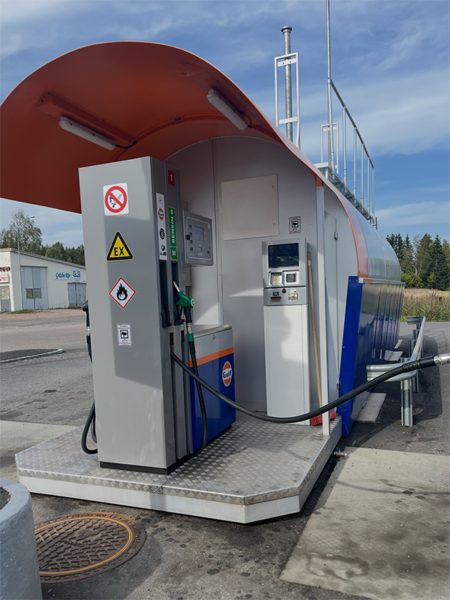
Even without steps, equipment is often mounted too high. Buttons to select fuel type, card readers, and screens are designed for standing users.
“Many have a small ledge/plateau on which the machines stand, making them difficult to reach. On others, the number pad for the card terminal is positioned far too high.”
“The difficult part is that some diesel pumps have buttons to choose between car or truck fueling placed too high. I’ve learned that if you wait, it will start in car mode anyway, but it was really frustrating before I figured that out, and I had to ask passersby to press the button.”
4. Unstaffed Stations Are a Problem
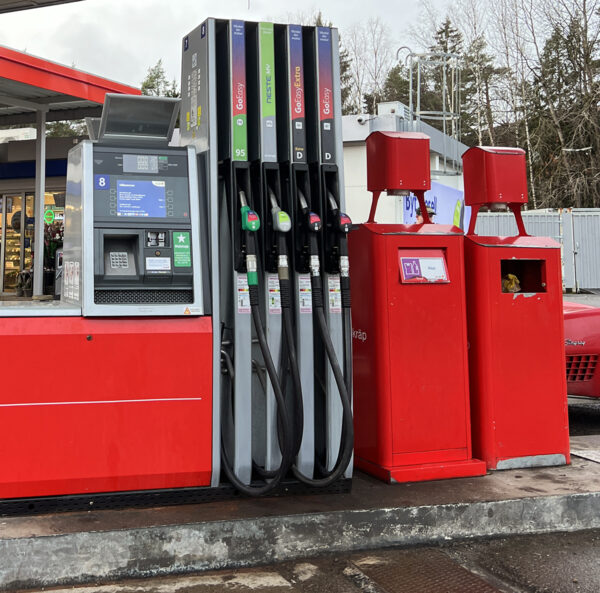
When no staff are available, wheelchair users have to rely on other people or plan their drives based on where the staffed stations are. This creates both practical and safety concerns.
“I try to avoid unstaffed stations, but sometimes there’s no choice. I didn’t choose an electric car because I feared it would be even harder.”
“I try to plan to refuel on one of the days I have an assistant, but sometimes I forget, so then I have to try to find a staffed station.”
“Unstaffed stations are often difficult, with a step up to the card reader. If it had at least been turned around, it would have worked better and been accessible from the side.”
5. Big Differences Between Stations
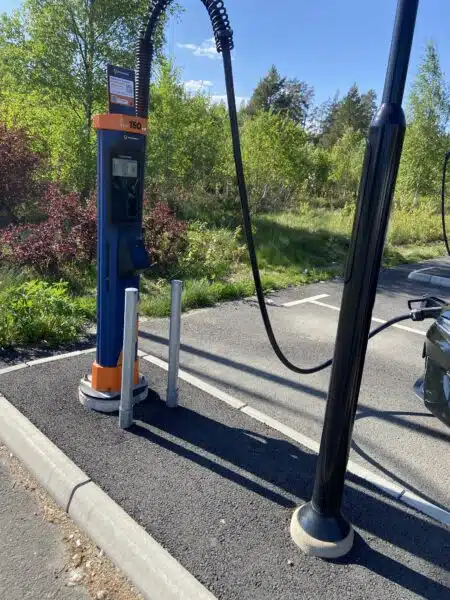
Not all stations are equal. Some chains have pumps and card readers at lower heights. Others still require climbing onto concrete platforms.
“I almost always refuel at the same chain, and I never experience any issues there. The payment terminal is angled outward and even though it’s mounted a bit higher, it’s still reachable from a wheelchair.”
“The station where I live has a lower pump that I can use from my wheelchair.”
“Certain pumps work well because I can reach to insert my card and enter my PIN while staying in my wheelchair. The least accessible ones are those where you have to get up onto a concrete platform just to use the card reader.”
6. Apps Make it Easier
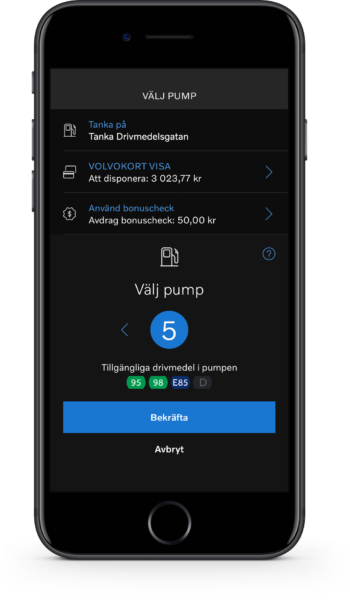
More and more companies are making it possible to use apps to control refueling or charging, which can solve many of these problems. But it’s important to remember that while digital solutions make it much easier for many, the apps themselves need to be accessible as well.
“Many providers offer the option to control the refueling process through a mobile app instead of using the physical terminal on site.”
“I use a fuel provider that also has an app where I can select the pump and start refueling, so I don’t have to deal with the barrier around the pump that makes it hard to reach the card terminal.”
Summary of wheelchair users’ experiences at fuel and charging stations
- Many need assistance and are forced to plan their trips accordingly.
- Steps and curbs are both common and major obstacles.
- Reaching pumps, chargers, and payment equipment is often difficult.
- Unstaffed stations are even more challenging since no help is available.
- The level of accessibility varies between stations.
- Apps can simplify refueling and charging.
Fuel and Charging Stations under the European Accessibility Act
The European Accessibility Act has been in place since June 28 2025. This law covers products such as payment terminals and self-service terminals at fuel and charging stations and in other settings.
The EAA states that controls and interfaces should be within reach and not require great strength or fine motor skills. Detailed requirements are specified in the European standard EN 301 549. According to the current version of the EN standard, controls or “operable parts” should be placed roughly between 38 cm and 122 cm from the ground (the exact measurements are under revision and will be specified in the upcoming version of EN 301 549).
Other requirements include possibilities to extend the time given to perform a task, which is important for wheelchair users who might need extra time to navigate the fuel or charging stations.
For a deeper dive into the legal requirements and detailed examples from the EAA, you can read our article European Accessibility Act (EAA) – Kiosks, touch screens and physical devices.
It is also important to note that inaccessible fuel or charging stations may fall under national discrimination laws and lead to legal consequences. This has already happened in Sweden, where a fuel station company was found guilty of discrimination against a wheelchair user. Read more in an article by DHR (in Swedish).
A new specification for accessible charging stations has been published
A new Swedish accessibility specification for charging stations has been published by SIS in collaboration with disability organizations like DHR and BraunAbility. The specification is called Tillgängliga laddningsplatser för elfordon – Krav och rekommendationer (Accessible recharging stations for electric road vehicles — Requirements and recommendations).
The goal of the technical specification is to create clear requirements for how charging sites should be designed in order to be usable for people with different levels of mobility, length or hand strength. The specification covers everything from site layout to digital interfaces and other interactive systems that are required for charging an electric vehicle. It is intended to guide both new construction and upgrades of existing stations. If widely adopted, this work can remove many of the barriers wheelchair users face today and make it possible for us to charge our cars more independently.
Want a helping hand?
We can help you audit and user test payment terminals, self-service terminals, and other physical machines. You will receive a clear report that shows whether your solution meets the requirements of the European Accessibility Act and EN 301 549.
Even when a product is not formally covered by the EAA, we can still support you in making it easier to use for people with disabilities.
If you would like help from accessibility specialists like me on your specific product or service, you can find our contact details in the footer below.
The independence that comes with driving your own car should not be taken away from people with disabilities, especially when other forms of transport can be even less accessible. Improving accessibility at fuel and charging stations is essential and benefits everyone, with or without disabilities.
Check out our accessibility consulting services or just drop us a message at hello@axesslab.com – we’re happy to help!